
Can Cats See in the Dark? Have you ever stumbled through a dark room at night, carefully trying not to bump into things, only to see your cat gracefully weave past you with complete confidence? It’s a moment every cat owner has experienced. It truly seems like they have a secret superpower, a built-in pair of night-vision goggles.
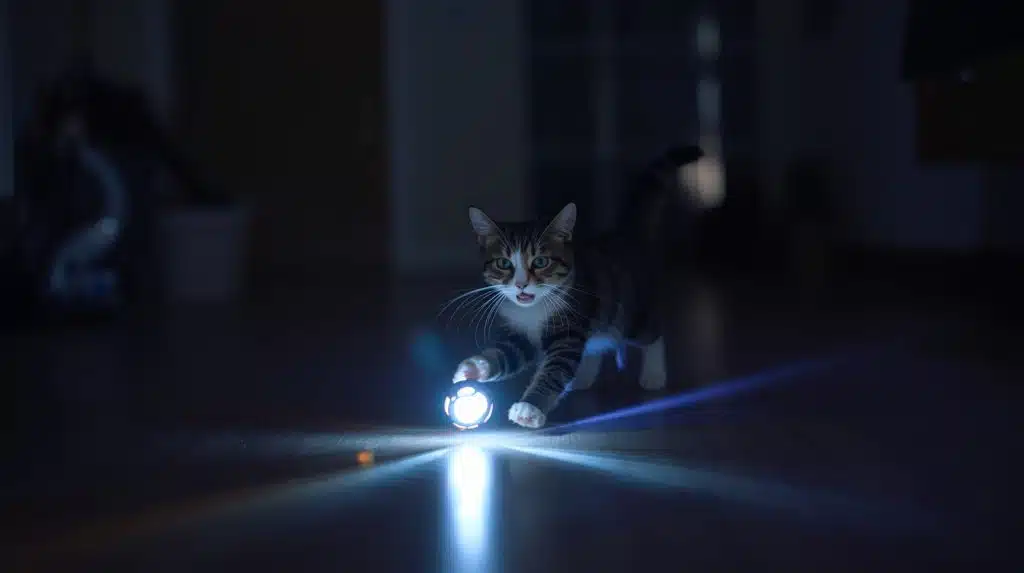
I remember watching my own cat, Leo, chase a toy mouse in a room lit only by the faint glow of the streetlights outside. His precision was flawless. It made me wonder: Can cats really see in the dark, or is it just a myth?
The truth is, while they can’t see in *complete* darkness, their eyes are magnificent marvels of natural engineering, designed to master the low-light world in ways we can only imagine.
This article will unveil the mysteries of feline vision. We’ll explore the science behind their incredible night vision and finally uncover the truth about what your cat really sees when the lights go out.
Cat Eye Anatomy
Cats have unique eyes that help them see in low light. Their eyes are built to catch as much light as possible. This special design makes night vision easier for cats. Understanding cat eye anatomy reveals how they see in the dark.
Each part of a cat’s eye plays a role in capturing and processing light. From the shape of their pupils to the reflective layer behind the retina, every detail matters. Let’s explore the main features that give cats their night vision advantage.
Structure Of The Feline Eye
The feline eye is larger compared to its head size. This helps gather more light in dim places. Cats have a high number of rod cells in their retinas. Rod cells detect light and movement in low light. Their eyes also have a lens that adjusts quickly to light changes. These features make cats excellent at seeing in shadows and darkness.
Role Of The Tapetum Lucidum
The tapetum lucidum is a shiny layer behind the retina. It acts like a mirror and reflects light back into the eye. This reflection gives the retina a second chance to absorb light. It improves a cat’s vision in the dark by increasing light sensitivity. This layer also causes the glowing eyes you see at night.
Pupil Shape And Function
Cats have vertical slit-shaped pupils. These pupils open wide to let in more light at night. During bright light, they become narrow slits to protect the eye. This shape helps cats control how much light enters. It also sharpens focus and depth perception. This ability supports their hunting skills in different lighting.
Night Vision Capabilities
Cats have amazing night vision that helps them see in low light. Their eyes are built to catch more light than human eyes. This ability helps them hunt and move safely at night.
Their eyes have special cells and layers that work together. These features allow cats to see better when light is very dim. They do not see in total darkness but can make out shapes and movement.
Light Sensitivity Compared To Humans
Cats’ eyes are much more sensitive to light than human eyes. They have more rod cells, which detect light and dark. Humans have more cone cells that see colors. Rod cells work better in low light.
Cats can see with about one-sixth the light that humans need. Their pupils also open wider to let in more light at night. This helps them use every bit of available light.
How Cats Detect Movement In Low Light
Cats are great at spotting movement in the dark. Their eyes catch small changes in light and shadow quickly. This skill helps them notice prey or danger even with little light.
The tapetum lucidum, a shiny layer behind their retina, reflects light. This reflection gives their eyes a glowing look at night. It also boosts their ability to see movement clearly.
Limitations Of Feline Night Vision
Cat night vision is not perfect. They cannot see in total darkness. Some light must be present for their eyes to work.
Cats see fewer colors than humans. Their vision is mostly shades of blue and green. Also, their sharpness of vision is lower than humans in bright light.
Night vision helps cats survive, but it has limits. They rely on other senses, like hearing and smell, too.
Behavioral Adaptations
Cats have special behaviors that help them live in the dark. Their eyes are good at seeing in low light. But they also use their bodies and habits to move safely at night. These behaviors help cats hunt, find their way, and stay safe.
Understanding these behaviors shows how cats adapt to night life. They use more than just their eyes. Their whiskers, ears, and sleeping times all play a role. These habits help cats be active and alert in the dark.
Hunting Techniques At Night
Cats hunt quietly and carefully in the dark. They wait patiently and watch for small movements. Their sharp hearing helps them locate prey. Cats use slow and smooth steps to avoid noise. Night hunting gives cats a better chance to catch food.
Use Of Whiskers And Other Senses
Whiskers help cats feel objects and spaces in the dark. They detect small changes in air and nearby movements. Cats also use their strong sense of smell and hearing. These senses guide them when vision is limited. Whiskers act like a radar in the dark.
Sleeping Patterns And Activity Cycles
Cats sleep many hours during the day. They rest deeply to save energy. At night, they become more active and alert. This schedule matches their hunting needs. Cats are naturally more awake when it is dark.
Comparisons With Other Animals
Cats have amazing night vision. They can see better in the dark than many animals. Comparing cats with other creatures shows how special their eyes are. This helps us understand their unique place in nature.
Cats Vs. Dogs
Cats see better in low light than dogs. Their eyes have more rod cells. Rod cells help detect light in the dark. Dogs rely more on smell and hearing at night. Cats use their sharp vision to hunt silently.
Cats Vs. Nocturnal Predators
Nocturnal predators like owls and foxes also see well in the dark. Owls have large eyes to catch more light. Foxes have a reflective layer like cats. This layer, called tapetum lucidum, boosts night vision. Cats’ eyes are smaller but very efficient in dim light.
Evolutionary Advantages
Cats evolved to hunt at dawn and dusk. Their night vision helps them catch prey in low light. This skill gave them a survival edge. Seeing in the dark means finding food and avoiding danger. This trait helped cats become successful hunters.
Common Myths About Cat Vision
Cats have fascinated people for centuries. Their eyes are often a topic of curiosity. Many myths surround how cats see, especially in low light. Understanding these myths helps us appreciate their vision better.
Let’s clear up some common misunderstandings about cat eyesight.
Can Cats See In Total Darkness?
Cats cannot see in complete darkness. They need at least a small amount of light. Their eyes are sensitive to low light but not to no light. Cats rely on their other senses in total darkness.
Do Cats Have Supernatural Sight?
Cats do not have supernatural vision. Their eyes are just built differently than humans’. They can see better in dim light, but not magically. Their sharp vision helps them hunt in early morning or evening.
Misconceptions About Eye Shine
The glowing eyes of cats at night are often misunderstood. This shine comes from a layer called the tapetum lucidum. It reflects light to help cats see better in low light. This does not mean cats have special powers.
Tips For Cat Owners
Cats have a special ability to see in low light. This helps them move safely at night. Cat owners can help by making the home safe and comfortable. Small changes can protect your cat and improve its night vision. Here are some easy tips for cat owners.
Creating A Safe Environment At Night
Keep hallways and rooms clear of sharp objects. Remove small items your cat might knock over. Provide soft bedding in quiet, dark areas. Close doors to dangerous rooms or stairs. Use baby gates if needed to block risky spaces. This helps your cat explore safely at night.
Enhancing Indoor Lighting
Use dim night lights in key areas. Soft lights help cats see without hurting their eyes. Place lights near food and water bowls. Avoid bright lights that can disturb your cat’s rest. Motion sensor lights work well for sudden movement. This gentle lighting guides your cat’s way.
Monitoring Eye Health
Watch for signs of eye problems like redness or cloudiness. Check if your cat blinks more or squints. Schedule regular vet visits to check eye health. Early detection of issues keeps your cat comfortable. Clean your cat’s eyes gently if needed. Healthy eyes support your cat’s night vision.
Frequently Asked Questions: Can Cats See in the Dark
Can Cats See In Complete Darkness?
Cats cannot see in complete darkness. They rely on minimal light to detect shapes and movement. Their eyes have more rod cells, which help in low light but not total darkness.
Why Do Cats’ Eyes Glow At Night?
Cats’ eyes glow due to a layer called the tapetum lucidum. It reflects light back through the retina, enhancing night vision and making their eyes appear to shine in the dark.
How Well Can Cats See In Low Light?
Cats see exceptionally well in low light, about six times better than humans. This helps them hunt and navigate effectively during dawn, dusk, and nighttime.
Do Cats Have Better Night Vision Than Dogs?
Yes, cats have better night vision than dogs. Their eyes have more rod cells and a more reflective tapetum lucidum, improving their ability to see in dim conditions.
Enhance Your Cat’s Nighttime World
While your cat can see well in low light, you can still make their nighttime environment safer and more stimulating. Here are a few products we love that embrace your cat’s natural instincts.
- Glow-in-the-Dark Toys: Keep your cat entertained even after you’ve gone to bed. Fun and interactive glow-in-the-dark balls or wands are perfect for satisfying their nocturnal hunting instincts.
- Motion-Activated Night Lights: To prevent you from tripping over your cat (or their toys) during a midnight stroll to the kitchen, a soft motion-activated night light is a lifesaver. It provides just enough light for you without disturbing your cat’s sensitive eyes.
- A Reflective “Breakaway” Collar: If your indoor cat ever accidentally slips outside at night, a reflective collar can make them much more visible to passing cars, potentially saving their life. Ensure it has a “breakaway” clasp for safety.
Conclusion
So, while cats don’t have magical night-vision superpowers, the reality is even more impressive. Their eyes are exquisitely adapted to a world of shadows and twilight, allowing them to navigate, hunt, and play in conditions where we would be completely blind.
The next time you see your cat’s eyes shining back at you from a dark corner of the room, you’ll know you’re not just looking at a pet; you’re looking at a master of the night, a creature perfectly designed for its world. Understanding this incredible ability, like I did with **Leo**, doesn’t just satisfy our curiosity—it deepens our respect and admiration for these mysterious and wonderful companions.
You might also like…
- Free Cat Nutrition Calculator: Vet-Approved Personal Meal Plan (2025)
- 150+ Best Names for Orange Cats (Male, Female & Cute Ideas)
- Benadryl for Cats: Is It Safe? Vet Guide to Dosage & Risks (2025)
- Benefits of coconut oil for cats : 7 Benefits, Uses, and Safety Tips (2025)
- Best Cat Food for Sensitive Stomach (2025): 5 Vet Picks