
Why Do Cats Scratch Furniture? First, Let’s Understand the Reason
That beautiful new sofa, that antique wooden chair… they were perfect until you saw the first tell-tale signs: tiny, pulled threads that soon became full-blown scratch marks. If you’re a cat owner, you know this frustration. For years, I’ve helped fellow cat lovers with this exact problem. As a passionate researcher and a lifelong cat parent, my mission is to stop the behavior and understand it. In this guide, I will show you exactly how to stop your cat from scratching furniture using kind, effective methods that build your relationship, not break it. This isn’t just another “how-to” list; it’s a complete, hands-on guide to bring peace back to your home.
First, Let’s Understand: Why Do Cats Scratch?
Before we can solve the problem, we need to understand that scratching is a normal, healthy, and necessary cat behavior. Punishing your cat for it will only make them confused and anxious. They aren’t doing it to be naughty; they are doing it for a few important reasons:
- To Mark Territory: Cats have scent glands in their paws. When they scratch, they leave behind both a visual mark and a unique scent that says, “This is my space.”
- To Stretch & Exercise: Scratching is a great workout for the muscles in their paws, legs, shoulders, and back. It’s like a good yoga session for your cat!
- To Maintain Claw Health: It helps them remove the dead outer layer of their claws, keeping them sharp and healthy.
Our goal is not to stop the scratching but to redirect it to an acceptable place.
While these are the most common reasons, sometimes excessive scratching can also be a sign of stress or anxiety. Ensuring your cat is healthy from the inside out is the first step to a happy, well-behaved pet. A balanced diet plays a huge role in this. If you’ve noticed other signs like an upset tummy, you might want to explore our guide on the best cat food for a sensitive stomach.
Trick #1: The Great Redirect (Provide a Better Alternative)
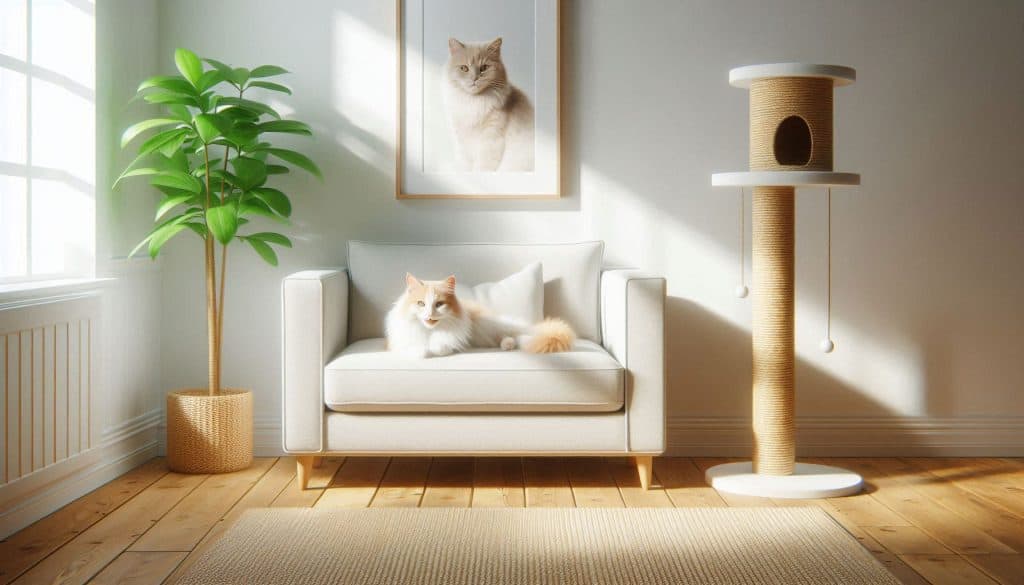
This is the most important step, and where most owners go wrong. You can’t just say “No!”; you have to offer a better “Yes!”
What You Need: A High-Quality Scratching Post
A good scratching post isn’t just a toy; it’s your cat’s personal communication hub, nail salon, and gym all in one.
- My Journey with the Right Scratcher: I remember when I brought home my little kitten, Milo. He immediately fell in love with the rough corner of my expensive armchair. My first instinct was to scold him. Instead, I bought a small, carpeted scratching post. He completely ignored it. It was a failure.
- After some research, I learned my mistake. I bought a tall, sturdy post covered in sisal rope—a material cats love to dig their claws into. The new post was tall enough for Milo to get a full, satisfying stretch. I placed it right next to the armchair where he was scratching. Then, I used a bit of catnip spray on the post to make it more appealing. The change was almost immediate. The armchair was forgotten, and the post became his new favorite spot.
- “If you’re looking for the perfect one, I have a short video showcasing some of the best scratching posts that cats absolutely love. You can watch it here to see them in action.”
Trick #2: Make the Furniture Unattractive (Create a “No-Go Zone”)
While you’re teaching your cat to love their new scratching post, you need to make their old scratching spots less appealing.
What You Need: Cat-Safe Deterrents

- My Journey with Sticky Tape: Milo, however, was stubborn. The armchair was still his favorite spot for an evening scratch. So, I tried double-sided sticky tape on the corners. Cats absolutely hate sticky feelings on their paws. The first time Milo went to scratch and felt the tape, he pulled his paw back in disgust. He tried a couple more times over the next day and then gave up completely. It was a simple but incredibly effective trick. There are some great, furniture-safe options like this one on Amazon.
Another great option is a citrus-scented spray.

- Cats generally dislike the smell of lemon or orange. A light spritz on the furniture can be enough to keep them away. Just make sure to test it on a hidden part of the fabric first!
Trick #3: Reward, Reward, Reward! (Positive Reinforcement)
This is the final piece of the puzzle that ties everything together. You need to make your cat feel that scratching the post is the best decision they’ve ever made.
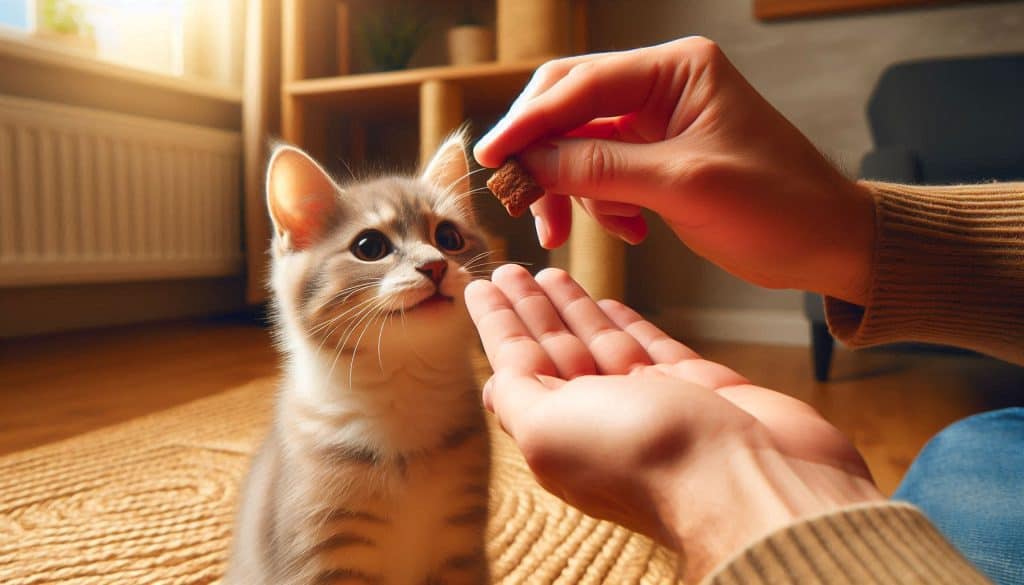
What You Need: Praise and Delicious Treats
- My Journey with Positive Reinforcement: The final step with Milo was praise. Every time I saw him even look at the scratching post, I’d say “Good boy, Milo!” in a happy, encouraging voice. When he actually used it, he’d get a tiny, delicious treat immediately after he was done.
He quickly learned the connection: Scratch the post = Get praise and a tasty reward. Scratch the chair = Get a sticky, unpleasant feeling. The choice became very easy for him. In my opinion, this positive connection is what makes the training stick for good. I found that these tiny, low-calorie treats work wonders for training.
Common Questions About How to Stop a Cat From Scratching Furniture
Q: What scents deter cats from scratching?
A: Cats have a very powerful sense of smell, and they dislike certain strong scents. The most effective scents to keep them away from your furniture are citrus smells, like lemon, orange, or grapefruit. Many cats also dislike the smell of menthol, rosemary, and lavender.
You can make a simple, safe spray at home by mixing water with a little bit of lemon juice. A much easier and often more effective option is to buy a commercial citrus-based spray that is specially made to be safe for furniture and pets. Remember to always use scents to make the furniture unattractive, while also providing an attractive scratching post nearby!
Q: Will trimming my cat’s nails stop them from scratching furniture?
A: This is a great question, and the answer is both yes and no.
No, trimming your cat’s nails will not stop their natural instinct to scratch. They will still go through the scratching motion to stretch their muscles and mark their territory.
But yes, it will dramatically reduce the damage they cause. Blunt, trimmed nails cannot shred fabric and wood the way sharp nails can.
Think of it this way: trimming your cat’s nails is like putting soft gloves on a boxer. They can still punch, but they won’t do much harm. So, regular nail trimming is a very important part of the solution, but it must be combined with providing a good scratching post and making the furniture less attractive to scratch.
Q: How long does it take to train a cat to use a scratching post?
A: There is no magic number, as every cat is different! The training time depends on a few things: your cat’s age (kittens usually learn faster), their personality, and how long they have been scratching the furniture.
Generally, with consistent training, most cats will start using the new scratching post regularly within a few days to a few weeks. For some older cats with very established habits, it might take a month or more.
Here are some tips to make it faster:
- Location, Location, Location: Place the new post right next to the piece of furniture they are currently scratching.
- Make it Fun: Use a little catnip spray on the new post.
- Praise and Reward: Give them a treat and lots of praise every time they use it.
- Be Patient: Never punish your cat. Gentle and consistent encouragement is the key to success.
Final Verdict: You Can Win This Battle!
Stopping your cat from scratching furniture isn’t about punishment; it’s about understanding and redirection. Remember the three simple tricks:
- Redirect: Get a great scratching post your cat will love.
- Repel: Make the furniture an unpleasant place to scratch.
- Reward: Shower them with praise and treats when they use the post.
Be patient, be consistent, and you will not only save your sofa but also build a stronger, more trusting relationship with your furry friend.