
As cat parents, we love sharing our lives with our furry companions—and sometimes, that includes sharing our food. It’s so tempting to give your cat a little piece of cheese from your plate or a lick of yogurt from your spoon. I know the feeling well; my cat, Leo, has perfected the art of begging with his big, innocent eyes.
But what seems like a harmless treat can sometimes be incredibly dangerous. Many everyday human foods toxic to cats are lurking in our kitchens, and a simple mistake can lead to a serious health emergency. Knowing the difference between a safe snack and a potential poison is one of the most important responsibilities we have as pet owners.
This guide isn’t meant to scare you. It’s here to empower you. We’ll walk you through the most dangerous items to avoid, so you can keep your beloved cat safe, healthy, and happy for years to come.
Common Toxic Foods
Cats are curious animals. They often try to taste human food. Some foods are very harmful to cats. Knowing these common toxic foods helps keep cats safe. Avoid giving these foods to your feline friend.
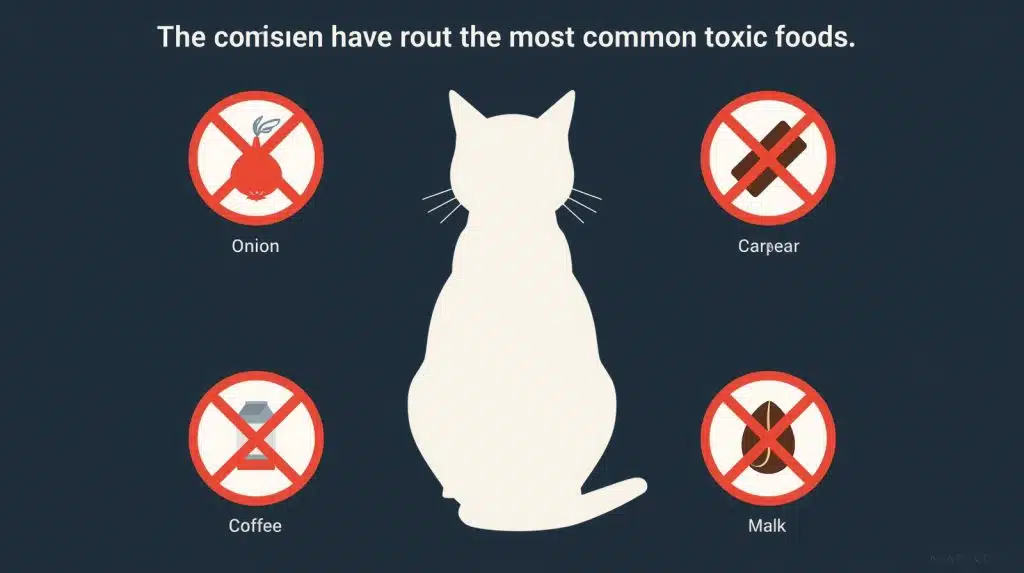
Chocolate
Chocolate contains substances called theobromine and caffeine. These chemicals are toxic to cats. Even small amounts can cause vomiting and diarrhea. Large amounts may cause seizures or heart problems. Dark chocolate is more dangerous than milk chocolate.
Onions And Garlic
Onions and garlic contain compounds that damage cat’s red blood cells. This can lead to anemia. Cats can get sick from raw, cooked, or powdered forms. Symptoms include weakness, pale gums, and breathing trouble. Avoid feeding any food with these ingredients.
I once had a scare when I was cooking and dropped a small piece of onion on the floor. Before I could even react, my cat, Leo, darted out and started sniffing it. Thankfully, I was quick enough to snatch it away. It was a heart-stopping moment that taught me a valuable lesson: even a tiny amount of something as common as an onion can be a huge risk. It made me incredibly vigilant about keeping these ingredients safely stored away.
Grapes And Raisins
Grapes and raisins can cause kidney failure in cats. The exact harmful substance is unknown. Even a small amount can make cats very ill. Signs include vomiting, diarrhea, and lethargy. Keep these fruits away from your cat at all times.
Alcohol
Alcohol is highly toxic to cats. Even tiny amounts can cause severe health problems. It can lead to vomiting, difficulty breathing, and coma. Never give your cat any alcoholic drinks or foods containing alcohol. Store alcohol safely out of reach.
Caffeine
Caffeine is found in coffee, tea, and energy drinks. It stimulates the nervous system and heart in cats. This can cause restlessness, rapid breathing, and heart palpitations. High doses may result in seizures or death. Keep all caffeine sources away from cats.
Dangers Of Sweeteners
Sweeteners are common in many human foods and drinks. Many people use them to reduce sugar intake. But sweeteners can be very dangerous to cats. Cats are sensitive to these substances. Some sweeteners can cause serious health problems or even death. Knowing the dangers helps keep your cat safe.
Xylitol Risks
Xylitol is a sweetener found in gum, candy, and baked goods. It is very toxic to cats. Even a small amount can cause a sudden drop in blood sugar. This leads to weakness, seizures, and in severe cases, liver failure. Symptoms often appear within 30 minutes of eating. Immediate veterinary care is essential for survival.
Other Artificial Sweeteners
Other sweeteners like sorbitol and aspartame are less toxic but still risky. They may cause stomach upset, vomiting, or diarrhea in cats. Long-term exposure can harm their organs. Always check ingredient labels before sharing food. Avoid giving any products with artificial sweeteners to your cat.
Unsafe Dairy Products
Dairy products seem harmless but can harm cats. Many cats cannot digest milk and cheese well. These foods contain lactose, a sugar that cats struggle to break down. Feeding dairy can cause stomach upset and other health issues. Understanding why dairy is unsafe helps keep cats healthy and happy.
Lactose Intolerance
Cats often lack enough lactase enzyme to digest lactose. Lactase breaks down lactose into simple sugars. Without it, lactose stays in the gut, causing problems. Most adult cats develop lactose intolerance after weaning. Even small amounts of dairy can cause discomfort. This intolerance makes dairy products unsafe for many cats.
Symptoms Of Dairy Toxicity
Signs of dairy toxicity usually appear soon after eating. Common symptoms include diarrhea and vomiting. Cats may also show bloating and stomach pain. Excess gas and cramps can make cats restless. Watch for changes in appetite or behavior. These symptoms signal that dairy is harming your cat.
Raw And Undercooked Foods
Raw and undercooked foods can pose serious risks to cats. These foods might carry harmful bacteria or parasites. Cats have sensitive digestive systems that can react badly to unsafe foods. Feeding raw or undercooked items might cause sickness or long-term health issues.
Understanding which raw foods are dangerous helps protect your cat’s health. It also keeps your home safe from contamination. Always be cautious with raw or undercooked meals offered to your pets.
Raw Meat And Eggs
Raw meat and eggs may contain bacteria like Salmonella and E. coli. These bacteria can cause vomiting, diarrhea, and infections in cats. Eggs also carry a risk of a protein called avidin. Avidin stops the absorption of biotin, a vitamin important for skin and coat health.
Cooking meat and eggs kills harmful bacteria and neutralizes avidin. Avoid feeding your cat raw or undercooked versions. Safe preparation helps prevent health problems and keeps your cat strong.
Fish Concerns
Raw fish can carry parasites and bacteria harmful to cats. Some fish contain an enzyme that destroys vitamin B1 (thiamine). Thiamine deficiency can cause nerve problems and even seizures in cats.
Cooking fish removes parasites and stops the enzyme from working. Feeding cooked fish is safer and supports your cat’s well-being. Avoid giving your cat raw fish or undercooked seafood.
Household Foods To Avoid
Many common foods in your home can harm your cat. Some of these foods seem harmless but cause serious health problems. Keep these foods out of reach to protect your furry friend.
Yeast Dough
Raw yeast dough can be very dangerous for cats. The dough rises inside their stomach, causing pain and swelling. This can lead to vomiting and difficulty breathing. Cats may also suffer from alcohol poisoning because the yeast produces alcohol. Never let your cat eat raw dough or bread mix.
Salt And Seasonings
Salt is harmful to cats in large amounts. Too much salt causes thirst, vomiting, or diarrhea. Severe salt poisoning can damage the kidneys and nervous system. Many seasonings contain salt or other toxic ingredients. Avoid giving your cat any seasoned or salty human food.
Signs Of Food Poisoning
Food poisoning in cats can happen quickly after they eat harmful human foods. Recognizing the signs early helps protect your cat’s health. Cats show different signs that something is wrong. Some signs are about how they act, while others affect their body.
Behavioral Changes
A cat with food poisoning may act restless or tired. They might hide more than usual. Loss of appetite is common. Your cat may refuse to eat or drink. Some cats become unusually aggressive or irritable. Watch for excessive drooling or pawing at the mouth. These behaviors mean your cat feels sick.
Physical Symptoms
Physical signs include vomiting and diarrhea. Your cat may have trouble walking or seem weak. Breathing might become fast or shallow. Look for pale gums or a swollen belly. Trembling or seizures can happen in severe cases. These symptoms need quick attention from a vet.
Emergency Steps
Seeing your cat eat something potentially toxic is terrifying. My heart sank the day Leo managed to lick a bit of chocolate icing off a plate. My first instinct was to panic, but I knew that the calmest thing I could do was also the most helpful: I immediately called my veterinarian. They were able to reassure me and give me clear instructions. Having your vet’s number and an emergency pet poison helpline saved on your phone is not just a good idea—it’s an absolute necessity.
Knowing what to do in an emergency can save your cat’s life. Cats can eat human foods that are very harmful. Acting fast and correctly is critical. This section explains the steps to take if your cat eats something toxic.
Immediate Actions
Remove the food from your cat’s reach right away. Check your cat for signs of illness like vomiting or weakness. Do not try to make your cat vomit unless told by a vet. Offer fresh water to help dilute the toxin. Keep your cat calm and in a safe place. Note the type and amount of food your cat ate. This information helps the vet treat your cat quickly.
When To Contact A Vet
Call your vet immediately if your cat shows any symptoms. Symptoms include drooling, vomiting, diarrhea, or shaking. If your cat ate chocolate, onions, garlic, grapes, or alcohol, contact the vet fast. Always call if you are unsure about the food. Vets can give advice on the next steps. Quick contact increases the chances of a full recovery.
Safe Treat Alternatives
Cats need treats that are safe and healthy. Many human foods can harm them. Finding good alternatives keeps your cat happy and safe. You can offer snacks that suit their taste and health needs. These treats also help strengthen your bond.
Cat-friendly Snacks
Choose snacks made just for cats. Many pet stores sell treats with safe ingredients. Look for options with real meat or fish. Avoid snacks with artificial colors or flavors. Small portions are best to prevent weight gain. These snacks satisfy your cat’s natural cravings.
Healthy Homemade Options
Make simple treats at home. Cook plain chicken or turkey without seasoning. Small pieces of cooked fish are also good. Try tiny bits of cooked egg as a protein source. Avoid salt, onion, garlic, and spices. Homemade treats let you control ingredients and freshness.
Frequently Asked Questions : Human Foods Toxic to Cats
What Human Foods Are Toxic To Cats?
Many human foods like onions, garlic, chocolate, grapes, and alcohol are toxic to cats. These can cause serious health issues and even be fatal. Always avoid feeding your cat any human food unless approved by a veterinarian.
Can Cats Safely Eat Dairy Products?
Most cats are lactose intolerant, so dairy can cause digestive upset. Avoid giving milk, cheese, or other dairy products to your cat to prevent diarrhea and stomach discomfort.
Why Is Chocolate Harmful To Cats?
Chocolate contains theobromine, which is toxic to cats. Even small amounts can cause vomiting, diarrhea, rapid breathing, or seizures. Always keep chocolate out of your cat’s reach.
Are Grapes And Raisins Dangerous For Cats?
Be Prepared: Essential Items for a Pet Emergency
Accidents can happen even to the most careful owners. Being prepared can make a critical difference. Here are some essential items from Amazon that we believe every cat owner should have on hand.
- A Well-Stocked Pet First-Aid Kit: For minor incidents and to help stabilize your pet before you can get to a vet, a dedicated pet first-aid kit is invaluable. It contains essentials like bandages, antiseptic wipes, and gauze.
- Activated Charcoal for Toxin Absorption: In some poisoning cases, vets recommend using activated charcoal to help absorb the toxic substance. Having a small container of pet-safe activated charcoal can be a lifesaver, but **NEVER** use it without direct instructions from your veterinarian.
Conclusion
Keeping our cats safe is our number one priority. Our kitchens are full of delicious foods, but as we’ve learned, many of them pose a hidden danger to our curious feline friends.
That close call I had with **Leo** and the piece of onion was a powerful reminder for me. It’s not about being paranoid; it’s about being prepared. By knowing which foods are toxic and by creating a safe environment, we can prevent most accidents before they happen.
This guide is your first step towards that peace of mind. Use it as a reference, share it with fellow cat lovers, and always remember: when in doubt, the safest treat is always one that is specifically made for cats.
Have you ever had a scary experience with your cat eating human food? Share your story in the comments below—it might help another owner!
You might also like…
- Clavamox for Cats: Effective Treatment Tips & Dosage Guide 2025
- Free Cat Nutrition Calculator: Vet-Approved Personal Meal Plan (2025)
- 150+ Best Names for Orange Cats (Male, Female & Cute Ideas)
- Benadryl for Cats: Is It Safe? Vet Guide to Dosage & Risks (2025)
- Benefits of coconut oil for cats : 7 Benefits, Uses, and Safety Tips (2025)